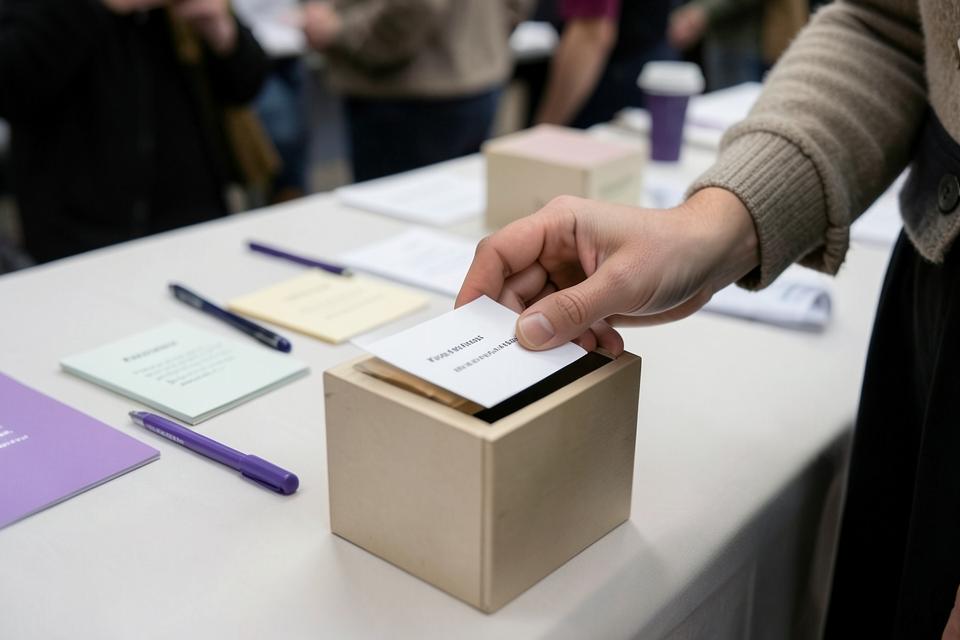
The problem, stated honestly
Ask a youth worker what changed for the young people this term and you will get a clear answer. They came out of their shell. They started talking to people they did not know. They stopped hovering at the edge of the room. Ask for that in a report and it becomes much harder, because there is no register to point at.
So one of two things usually happens. The organisation leaves the change out entirely and reports what it can count, sessions delivered, people attending, and the report becomes an activity log. Or it goes the other way and writes a line like “participants grew in confidence”, which is almost certainly true and carries no weight at all, because there is nothing behind it.
Both responses come from the same place: nobody showed you a practical way of evidencing something you cannot count on the door.
“Soft” is the wrong word
The word soft suggests these outcomes are vague, secondary, or a poor relation of the real numbers. None of that is accurate. Confidence, wellbeing, trust and belonging are usually the outcomes that matter most, and often the ones a service exists to create. They are not soft. They are simply not directly observable.
That distinction matters because it points at the right method. An outcome you can observe is evidenced by recording what you saw. An outcome only the person can report is evidenced by asking them, consistently, more than once. That is a different approach, not a weaker one. A carefully repeated question is stronger evidence than a headcount that answers nobody’s actual question.
It also helps to be precise about what you are claiming. “Wellbeing” on its own is too broad to evidence. “Feels less alone in a normal week” is narrow enough to ask about, and specific enough for a reader to picture.
A spectrum, not two boxes
It helps to stop thinking about hard and soft outcomes and start thinking about a scale, running from things that count themselves to things only a person can tell you. Most delivery produces outcomes at several points along it.
Attendance, sessions delivered
Recorded as delivery happens. No extra conversation needed.
Qualifications, referrals, tenancies
Observable, and usually recorded somewhere outside your organisation too.
Skills and behaviour
Partly observable by staff, but much better evidenced if the person confirms it.
Confidence, belonging, trust
Only the person can say. Asked at the start, asked again later.
The core method: ask, wait, ask again
There is no clever trick here, and anybody selling you one is overselling. The method that works is the plainest possible version of the scientific instinct: get a picture of how things are near the beginning, get the same picture again later, and show the difference rather than assert it.
You can do that with a scale, with a short question in the person’s own words, or with both. A scale gives you something you can summarise across a group. Free text gives you the thing that makes a report readable. Most organisations that do this well use one short scaled question and one open one, and nothing else.
What makes the comparison hold
- Ask the same question in the same words both times. Rewording it quietly breaks the comparison, even when the new wording is better.
- Ask early enough that the answer reflects how things were before you did much. A baseline collected in week six is not really a baseline.
- Choose a gap long enough for change to be plausible, and short enough that people are still in touch.
- Record who did not answer. A group of thirty where eight replied is a real finding and belongs in the report.
- Keep at least some answers in the person's own words, with their permission. One honest sentence outperforms a page of averages.
None of this needs an evaluation background. It needs the same two questions asked twice, written down somewhere you can find them again.
Five worked examples
Each row pairs an outcome you might genuinely want to claim with a simple, realistic way of evidencing it. Notice that none of them require a research design, and all of them require you to have asked something at the start.
| The outcome you want to claim | A simple way of evidencing it |
|---|---|
| ConfidencePeople feel more able to ask for help when they need it. | One scaled question at the start and the end of a programme: how easy would you find it to ask someone for help right now? Plus a free-text box for anything they want to add. |
| BelongingPeople have somewhere they feel known rather than processed. | Ask near the start and again after a few months whether there is anywhere they feel they belong, and let them name it in their own words. |
| WellbeingPeople feel less alone in a normal week. | A short scaled question about how often they spoke to someone they trust last week, repeated at a consistent interval. |
| Trust in servicesPeople are more willing to approach statutory services. | Ask whether they would contact a named type of service if they needed to, at intake and at exit, alongside a note of any referral actually made. |
| Self-managementPeople can spot a difficult period early and know what to do. | One question asked twice about what they would do next time, compared for change in specificity, plus their own description of a recent example. |
The honest limits
Self-reported change is real evidence. It is not a lesser substitute for a number, and a reader who dismisses it usually has not thought about it very hard. But it has limits that a good report states rather than hides.
What to say in the report
People are generous about a service when the person asking runs it. That is human, and it does not invalidate the answer, but it belongs in the methodology note. So does the response rate, and so does anything you changed halfway through.
A before-and-after comparison shows that something changed over a period. It does not show that you caused it. Someone’s confidence may have risen because of a new job, a change at home, or another service entirely. Establishing cause needs evaluation design and usually a comparison group, which is out of reach for most small organisations and does not need pretending otherwise.
Describe your contribution, show the evidence, name the gaps. That reads as competence. An unqualified causal claim reads as something to test.
Two things strengthen this position considerably. The first is triangulation: if a school, a landlord or a clinic records something pointing the same way, put it alongside what people told you. Two independent sources agreeing is much harder to dismiss. The second is consistency over time. A question asked the same way for two years produces a picture that a one-off survey never will.
Where to start if you are starting from nothing
Pick one outcome. The one your board asks about, or the one your next application turns on. Write it as a sentence about a person, not a concept. Turn it into one scaled question and one open question. Ask both at the start of whatever you deliver next, and put a note in the diary to ask again.
In six months you will have evidence of something you have been doing for years and never been able to show. That is a better use of effort than a fifteen-question form that gets completed once and abandoned.
If the distinction between what you did and what changed is still blurry, the outcomes versus outputs guide is the companion piece to this one. If the practical question is how to get people to answer at all, see collecting participant feedback, and what funders want in an impact report covers how to present it once you have it.
ImpactProof keeps the before and after answers together and linked to the delivery they came from, so the comparison is there when you need it rather than something to reconstruct.